
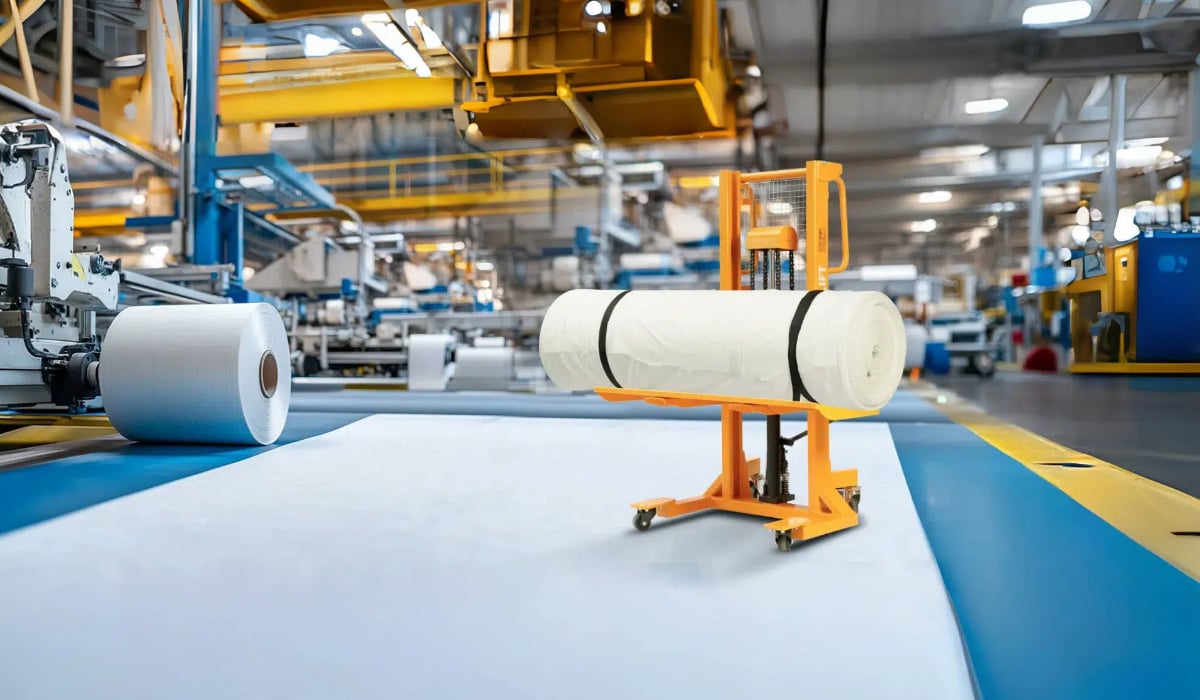
In the fast-paced world of modern industry, efficiency, safety, and cost-effectiveness are the cornerstones of a successful operation. From bustling warehouses to intricate production lines, the way materials are handled can have a significant impact on productivity and the bottom line. One of the most common, yet challenging, aspects of material handling is the management of large, heavy, and often unwieldy reels and rolls. This is where reel handling comes into play, a specialized process that is crucial for a wide range of industries, including telecommunications, manufacturing, printing, and textiles.
This comprehensive guide will delve into the world of reel handling, exploring what it is, the equipment involved, and the immense benefits it can bring to your business. We will also take a closer look at a standout piece of equipment that is revolutionizing the way businesses handle their materials: the Sinolift Electric Hydraulic Roll Lifter ECR-Series.
What is Reel Handling? A Fundamental Process Explained
At its core, reel handling is the process of moving, positioning, and controlling reels in various settings, such as warehouses, manufacturing plants, and transportation systems. These reels can be wound with a variety of materials, from heavy-duty cables and wires to delicate films and fabrics. The primary goal of reel handling is to ensure that these materials are transported and managed in a way that is not only efficient but also safe for both the operators and the materials themselves.
Without specialized equipment, handling these large and cumbersome reels can be a logistical nightmare. Manual handling is not only time-consuming and labor-intensive but also poses a significant risk of injury to workers and damage to the valuable materials on the reels. This is where specialized reel handling equipment becomes an indispensable asset for any business that deals with reeled materials.
The Power of Reel Handling Equipment
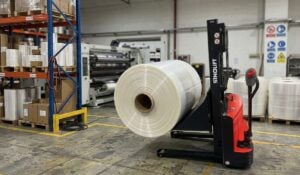
Reel handling equipment is a broad category of machinery designed specifically to address the challenges of managing reels. These powerful tools are engineered to lift, turn, transport, and stack reels with precision and ease. The most prominent and versatile piece of equipment in this category is the reel lifter.
A reel lifter is a device meticulously designed to lift, turn, transport, and stack reels of material, such as wire and cable, efficiently, quickly, and easily. It takes the manual labor and the associated risks out of the equation, replacing it with a streamlined and automated process.
So, how does a reel lifter accomplish these tasks with such proficiency? The magic lies in its innovative design, which typically incorporates a powerful hydraulic lift. This hydraulic system can be configured to lift and turn the reel in either direction, providing the operator with complete control over the movement of the reel. This level of control is essential for precise positioning, whether it’s loading a reel onto a machine, stacking it for storage, or transporting it across a facility.
One of the greatest strengths of a reel lifter is its versatility. It can be used to handle a wide array of materials, including:
- Wire and Cable: Essential for the telecommunications and electrical industries.
- Paper and Plastic: Common in the printing and packaging sectors.
- Fabric and Film: Used extensively in textiles and manufacturing.
Safety: A Non-Negotiable Aspect of Reel Handling
In any industrial setting, safety is paramount. The designers and manufacturers of reel handling equipment understand this, which is why reel lifters are equipped with a host of safety features. A high-quality reel lifter is designed to be exceptionally safe, incorporating features such as:
- Safety Guards: These are strategically placed to prevent the reel from tipping or becoming unstable during transport, which is a major concern with heavy and cylindrical objects.
- Emergency Shutdown Systems: In the event of an unforeseen issue, an emergency shutdown system allows the operator to immediately halt the operation of the lifter, preventing potential accidents and damage.
- Secure Locking Mechanisms: To ensure the reel is held firmly in place, reel lifters feature robust locking mechanisms that provide a secure grip on the reel.
By integrating these safety features, reel lifters not only protect the well-being of the operators but also safeguard the valuable materials being handled, preventing costly damage and production delays.
The Tangible Benefits of Reel Handling Equipment
Investing in reel handling equipment is not just about improving safety; it’s also a smart business decision that can lead to significant operational improvements and cost savings. The benefits of using a reel lifter are numerous and impactful:
- Streamlined Operations: By automating the process of reel handling, businesses can create a more efficient and streamlined workflow, reducing bottlenecks and improving overall productivity.
- Reduced Handling and Storage Costs: Efficient handling and stacking of reels can lead to better utilization of storage space and a reduction in the labor costs associated with manual handling.
- Increased Speed and Efficiency: A reel lifter allows for much faster transport and stacking of reels than by manual means, which can significantly reduce the time it takes to complete tasks and move materials through the production process.

Expanding the Horizon: An Introduction to Roll Handlers
While the terms “reel” and “roll” are often used interchangeably, in the context of material handling, there can be subtle differences. A roll handler is a piece of equipment that is used to hold, spread, guide, or otherwise manipulate rolls of film, fabric, paper, or other materials during various production processes. While a reel lifter is primarily focused on the transportation and storage of reels, a roll handler is often more involved in the active manipulation of the material during production.
Similar to reel lifters, roll handlers are incredibly versatile and can work with a wide range of materials, including:
- Film and Adhesive
- Fabric and Paper
- Cableand other flexible materials
The common tasks that a roll handler can perform are essential for many production processes and include:
- Holding rolls securely in place.
- Spreading materials to the correct width.
- Guiding materials into machinery.
- Cutting materials to the desired length.
- Rewinding materials onto new rolls.
The benefits of using a roll handler mirror those of a reel lifter, with a focus on improving production processes. By automating the handling of rolls, businesses can improve production efficiency, reduce labor costs, and minimize downtime caused by the challenges of manual handling.
As with any piece of industrial equipment, safety is a top priority when using a roll handler. It is crucial to ensure that the rolls are properly secured and that the handling equipment is in good working condition. Adhering to all safety protocols, wearing the appropriate protective clothing, and observing all safety guidelines are essential to ensure the safety of the operator and prevent damage to the material.
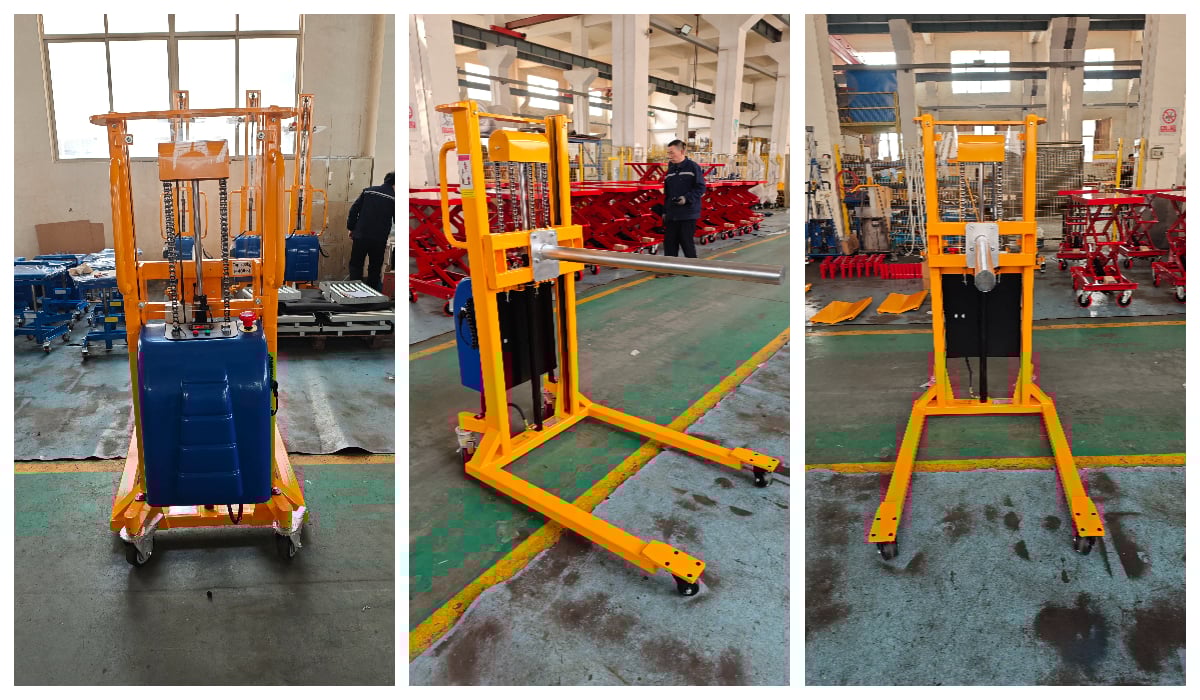
Product Spotlight: The Sinolift Electric Hydraulic Roll Lifter ECR-Series
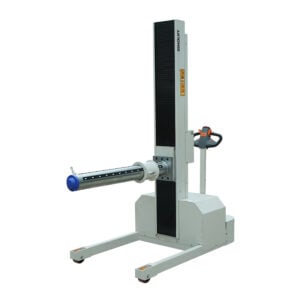
At Sinolift, we are committed to providing our customers with innovative and high-quality material handling solutions. Our Electric Hydraulic Roll Lifter ECR-Series, available at https://www.sinoliftforklifts.com/products/electric-hydraulic-roll-lifter-ecr-series.html, is a prime example of our dedication to excellence. This powerful and versatile roll lifter is designed to meet the demanding needs of modern industries, offering a perfect blend of performance, safety, and user-friendliness.
The ECR-Series is engineered to make the handling of heavy rolls effortless and efficient. It is the ideal solution for printing houses, textile factories, and packaging plants that regularly deal with large and heavy rolls of material.
Key Features of the Sinolift Electric Hydraulic Roll Lifter ECR-Series:
- Effortless Operation: With the ability to lift up to 600kg with the simple push of a button, the ECR-Series eliminates the need for manual pumping, making it incredibly easy to operate.
- Enhanced Safety: The lifter is equipped with non-slip surfaces, locking brakes, and reinforced straps to ensure that rolls are always secure during transport and lifting.
- Maneuverability in Tight Spaces: Heavy-duty swivel casters allow for easy maneuvering, even in crowded workshops and tight aisles.
- Low Maintenance: A sealed hydraulic system and a maintenance-free battery mean more uptime for your operations and less hassle with maintenance.
- Industrial-Grade Durability: Constructed from high-tensile steel, the ECR-Series is built to withstand the rigors of demanding industrial environments.
- Single-Person Operation: The user-friendly design allows for a single person to safely and efficiently handle heavy rolls, saving on labor and time.
In conclusion, effective reel and roll handling is a critical component of a successful and efficient industrial operation. By investing in specialized equipment like reel and roll lifters, businesses can not only enhance the safety of their workplace but also streamline their operations, reduce costs, and boost productivity. The Sinolift Electric Hydraulic Roll Lifter ECR-Series stands as a testament to the power of innovation in material handling, offering a robust, reliable, and user-friendly solution for all your roll handling needs.


 English
  Español
  Русский
  Português
  Türkçe
  Tiếng Việt