
Downtime is a word that makes every warehouse manager and logistics director cringe. It is the ultimate nightmare for material handling operations of any scale. You might own the most advanced equipment on the market, featuring the latest technological gadgets and safety gizmos. However, if that machine is sitting idle in the service bay waiting for repairs, it is not helping your business. It is costing you money.
When a forklift breaks down unexpectedly, your entire workflow hits a brick wall. Work stops, yet your overhead does not. You still have to pay operators who cannot perform their tasks. You scramble to make up for lost time, often leading to overtime costs. Operating expenses skyrocket, and worst of all, delayed shipments lead to dissatisfied customers.
Equipment failure is a frustrating reality, but it is not an unavoidable one. Much of the downtime experienced in busy facilities is entirely preventable. Protecting your ability to move products requires a proactive approach rather than a reactive one. Thankfully, you can drastically reduce equipment failures by focusing on four primary pillars: choosing the correct tool for your specific environment, ensuring proper daily usage, committing to rigorous forklift maintenance, and relying on high-quality components.
This practical guide provides actionable insights to help you keep your fleet healthy, your operators safe, and your products moving without interruption.

Matching the Machine to the Mission
When a specific component on a machine fails repeatedly, it is tempting to blame the manufacturer or the quality of the build. However, experienced technicians know that the root cause is often simpler: the forklift is simply the wrong tool for the job. To diagnose frequent breakdowns, you must first look at how and where the equipment is being used.
Consider the environment of a heavy industrial yard. Imagine a facility that regularly lifts heavy pallets of bricks or concrete blocks. Now imagine the operators transport these heavy loads across a cracked, uneven asphalt surface. In this scenario, a standard indoor forklift will struggle. The product constantly bounces during transit, putting massive, repeated stress on the carriage and the lift chains. Over time, these parts will bend, stretch, or snap because they weren’t designed for high-frequency shock loads.
In this specific case, a clever solution like adding a hydraulic accumulator can solve the problem. An accumulator uses nitrogen to actively adjust hydraulic pressure, acting like a shock absorber for the mast. This significantly reduces wear on the carriage and chains while providing a much smoother ride for the operator.
The takeaway is clear: efficiency begins with the right selection. Whether you need a simple aftermarket modification or a completely different model designed for rough terrain, matching the machine to the environment is the first step in eliminating unnecessary downtime.
Curbing Costly Operator Habits
Once you have matched the right forklift to your facility, the next step is monitoring its daily operation. Your operators are the first line of defense against downtime. Operating a machine incorrectly is not just a safety hazard; it is a direct cause of accelerated wear and tear.
Training your team to recognize and avoid “machine-killing” habits can save thousands in annual repair bills. Here are several common issues to address during training:
- The Danger of Tip Loading:This happens when an operator lifts a load using only the tips of the forks or fails to secure the load against the carriage face. This creates a leverage effect that can bend forks and damage the internal components of the mast.
- The Impact of Hot Shifting (Plugging):In internal combustion models, “plugging” occurs when an operator shifts from forward to reverse while the machine is still in motion. This violent shift forces the transmission to act as a brake. It leads to shattered gears and rapid tire degradation.
- Misusing the Forklift as a Bulldozer:A forklift is engineered to lift and carry, not to push or pull. Using the forks to shove heavy pallets across the floor puts lateral stress on the mast and carriage that the machine was never meant to handle.
- Ignoring Capacity Limits:Every machine has a data plate. Exceeding the maximum capacity compromises the center of gravity, leading to tip-overs. Even if the machine doesn’t tip, overloading blows out hydraulic seals and strains the engine or motor to its breaking point.
- Poor Entry and Exit Techniques:It sounds minor, but how an operator enters the cab matters. Grabbing the steering wheel for leverage or sliding heavily across the seat ruins the steering column and tears the upholstery. These small repairs add up and take the machine out of service.
By fostering a culture of “mechanical sympathy” among your operators, you ensure that the equipment is treated with respect, leading to a much longer service life.
The Science of Preventative Forklift Maintenance
Just like a high-performance vehicle, an industrial lift requires consistent, professional care. If you ignore your maintenance schedule, breakdowns are not a matter of “if,” but “when.” Forklifts have strict, pre-determined intervals for necessary service, usually measured in operating hours.
However, a “one size fits all” maintenance schedule rarely works. You must adapt your forklift maintenance plan to your specific reality.
Environmental Factors
Does your facility have thick dust, chemical fumes, or fibrous materials floating in the air? If you operate in a textile mill or a dusty outdoor yard, your air filters will clog much faster than those in a clean-room environment. You may need to blow out the radiator daily to prevent engine overheating—one of the fastest ways to kill an internal combustion engine.
Shift Intensity
Operating hours dictate your service schedule. If your facility runs three busy shifts every day, you will reach the standard 250-hour or 500-hour service interval in a matter of weeks. Without a tracking system, it is easy for these milestones to slip by, leading to dirty oil, worn-out brake pads, and eventually, a catastrophic failure.
The Daily Checklist
The most effective way to catch problems before they cause downtime is the pre-shift inspection. Operators should check fluid levels, tire pressure, chain tension, and look for hydraulic leaks every single morning. A small leak caught on Monday is a ten-minute fix; a blown cylinder on Friday is a two-day shutdown.

Choosing Quality Components and Workmanship
What else impacts your uptime? The actual build quality of the machine and the parts used to repair it. Not all forklifts are created equal. Machines built with thin metal panels, small-diameter pulleys, and undersized radiators will naturally spend more time in the repair shop.
When a part does eventually wear out, the choice of replacement is critical. You might be tempted by the lower price tag of generic, aftermarket parts. However, these “bargains” often lack the precise tolerances of genuine components. A poorly fitted hydraulic hose or an inferior oil filter can lead to systemic failures that cost ten times more than the money saved on the part.
Furthermore, the quality of the technician matters. A certified technician understands the specific nuances of your machine. They can spot early warning signs of wear that a general mechanic might miss. Investing in quality workmanship is the ultimate insurance policy against the “comeback” repair—where a machine is fixed, only to break down again 48 hours later.
Engineering Out the Downtime: The Sinolift T1 Advantage
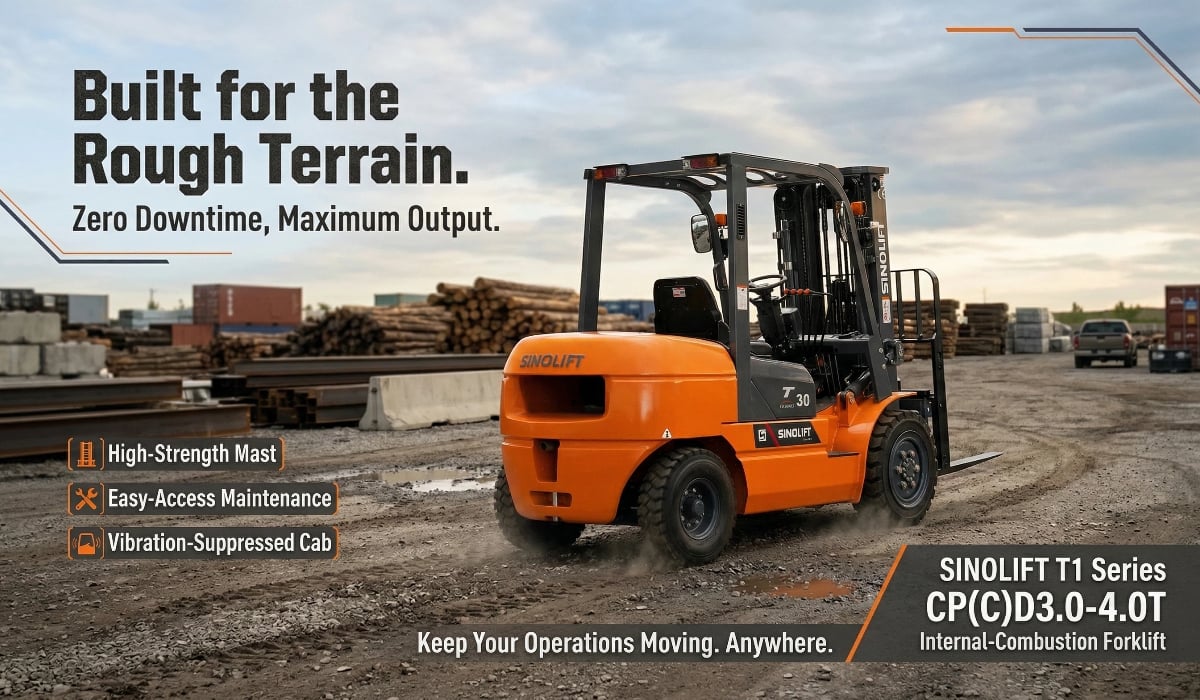
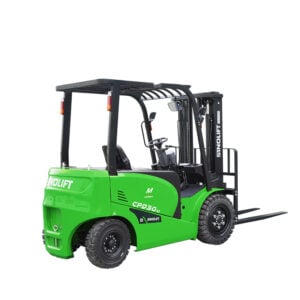
While maintenance and operator training are vital, the best way to reduce downtime is to start with a machine that is engineered for reliability and ease of service. For businesses that require heavy-duty performance without the headache of constant repairs, the SINOLIFT T1 Series CP(C)D3.0-4.0T Internal-Combustion Counter Balanced Forklift stands out as a premier choice.
The T1 Series is designed with a “maintenance-first” philosophy. One of the biggest hurdles to regular forklift maintenance is accessibility. The T1 Series solves this with a large-angle opening engine hood and tool-free removable floor panels. This allows your service team to access the engine, filters, and hydraulic system in seconds, ensuring that routine checks are actually performed rather than skipped.
Durability is also baked into the structural design. The T1 features an extra-wide-view mast made of high-strength steel, providing 35% greater strength than standard masts. This prevents the bowing and twisting that leads to premature wear in high-stacking applications. Additionally, the side-roller-wheel design and high-fulcrum tilt-cylinder mounting minimize mast sway, protecting the integrity of the hydraulic system even under heavy loads.
Whether you are loading containers in a port or managing a high-volume manufacturing facility, the T1 Series is built to stay on the floor and out of the shop. By combining world-class engineering with the maintenance tips outlined above, you can turn the nightmare of downtime into a thing of the past and keep your business moving forward with confidence.

 Tiếng Việt
  English
  Español
  Русский
  Português
  Türkçe