

In warehouses, factories, and logistics hubs worldwide, one piece of equipment stands out for its simplicity and efficiency: the pallet truck. Whether you call it a pallet jack, pump truck, or walkie, this unassuming tool has become the backbone of material handling, revolutionizing how businesses move heavy pallets with minimal effort. By eliminating manual lifting and streamlining workflows, pallet trucks save time, reduce injuries, and boost productivity.
But with so many types and features available, how do you choose the right one for your needs? This guide uncovers everything you need to know—from the different types of pallet trucks and their benefits to practical tips for selecting the best model. Let’s dive in!

What Is a Pallet Truck?
A pallet truck, often known as a pallet jack or pump truck, is an essential piece of equipment in warehouses, factories and various industrial environments. Pallet trucks are designed to lift and move pallets, which are flat, wooden transport structures that support goods when they require moving. At its core, it consists of a hydraulic fork, a pump handle (for manual models), wheels, and a load capacity tailored for different tasks.
These tools are the backbone of industries like warehousing, retail, and logistics. From restocking shelves to unloading trucks, they handle heavy loads with ease, making operations smoother for businesses of all sizes.
Types of Pallet Trucks
While all pallet trucks share the same goal, their designs and features vary to suit different scenarios. Here’s a closer look at the most common types:
1.Manual Pallet Trucks
The manual pallet jack, the grandaddy of them all, is an industrial tool designed to lift and move pallets. This manual device relies on the force exerted by the operator to lift, lower and steer. Using a pump handle, workers hydraulically lift pallets and push or pull the truck to its destination. While modern manual pallet trucks can achieve impressive load capacities—such as our NAV50 5-ton capacity model, they remain most effective for short-distance material handling. However, prolonged operation may lead to ergonomic strain due to sustained physical effort, making them ideal for light-to-medium-duty tasks where efficiency and simplicity are prioritized over long-range heavy lifting.
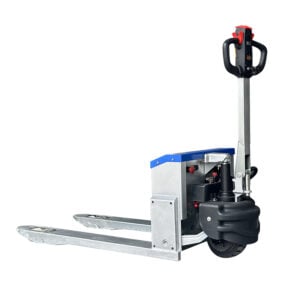
2.Electric Pallet Trucks
By integrating a manual pallet jack with an electric motor and battery system, you create an electric pallet jack—transforming traditional equipment into a streamlined, labor-saving solution for warehouse logistics. Effortless operation, zero strain, and enhanced efficiency are just a few clicks away. For larger warehouses handling heavy or frequent loads, electric pallet trucks are a game-changer. Powered by rechargeable batteries, these motorized models lift and transport pallets effortlessly, significantly reducing labor costs and workplace injuries over time.
3.Rider Pallet Jack
Rider pallet jacks are the limousines of material handling equipment—built for comfort and efficiency. As the name implies, these models feature a raised platform where operators can stand, making them ideal for sprawling warehouses with lengthy aisles and heavy pallet loads. While they share the same core functionality as standard electric pallet jacks, the added ride-on design elevates productivity by reducing operator fatigue during long shifts.
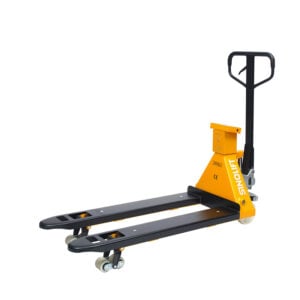
4.Weigh-Scale Pallet Trucks
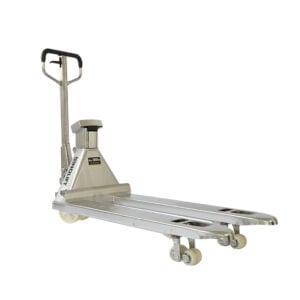
A specialized variant, weigh-scale pallet trucks integrate digital scales to measure load weight during transport. This feature streamlines inventory management, enabling businesses to track shipments in real time without additional equipment.
5.Narrow Pallet Jack
Narrow pallet trucks are specifically engineered with a slimmer fork design to accommodate compact pallets that standard models cannot handle. Their streamlined build allows seamless navigation through narrow aisles and confined spaces, making them indispensable in environments like small warehouses, retail outlets, and storage facilities. Ideal for tight spaces, these trucks prioritize maneuverability without compromising load capacity, ensuring efficient material handling in space-constrained settings.
- Low-Profile Pallet Trucks
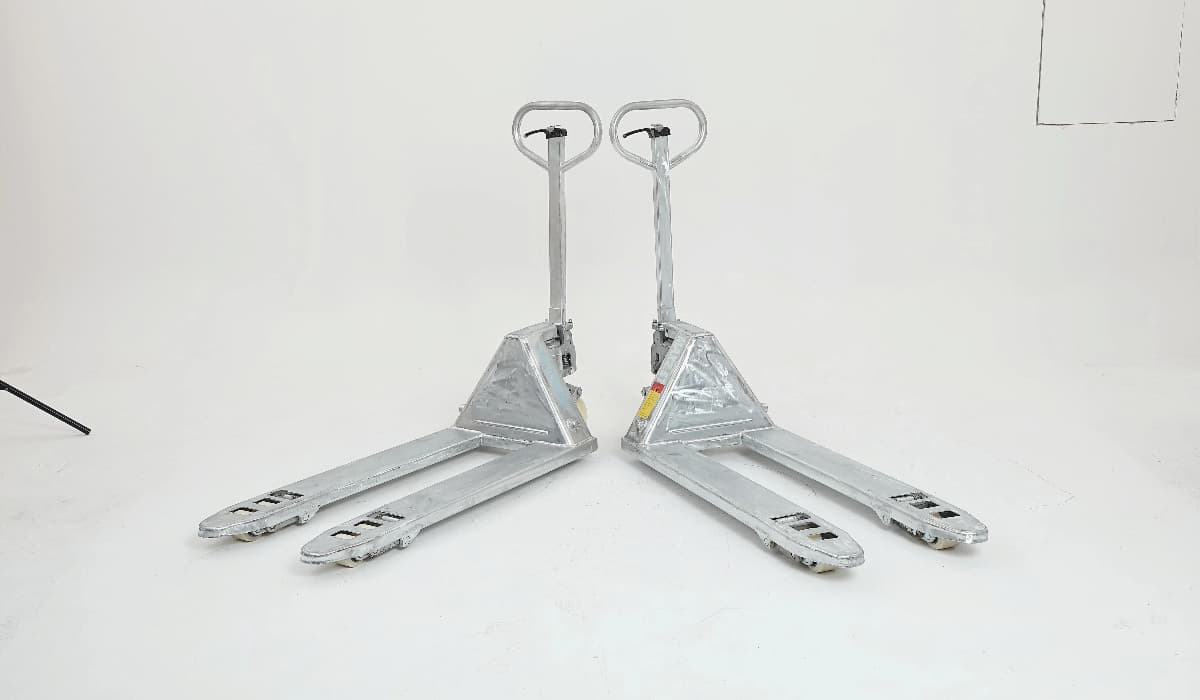
Engineered with a reduced fork height, these pallet trucks are tailored for handling pallets or skids withlimited vertical clearance. Ideal for industrial environments and warehouses that utilize non-standard pallets, oversized crates, or custom-sized platforms, their compact lifting mechanism ensures safe transport of fragile items while minimizing the risk of load damage or equipment interference. - Galvanized And Stainless SteelPallet Trucks
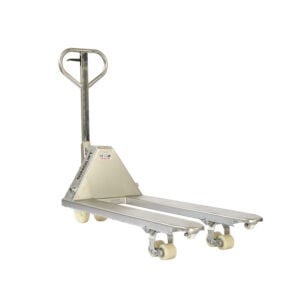
Engineered for demanding environments, these pallet trucks are constructed with full stainless steel and galvanized components to deliver superior rust and corrosion resistance. Ideal for humid conditions and hygiene-sensitive areas like food processing and pharmaceutical warehousing, these trucks combine a robust design with tray-type fork arms and reinforced side beams. Featuring hot-dip galvanized treatment and stainless steel bearings, axles, and fasteners throughout, they ensure long-term durability while maintaining strict sanitation standards.
Other Variations:
Mini Pallet Trucks: Compact and lightweight, ideal for tight spaces in small warehouses or retail stores.
All-Terrain Models: Rugged tires and durable frames built for outdoor use on uneven terrain.

Benefits of Using Pallet Trucks
Why invest in pallet trucks? Let’s explore their key advantages:
1.Cost Efficiency
Compared to forklifts, pallet trucks are far more affordable to purchase and maintain. They require no fuel (electric models) or extensive operator training, making them a budget-friendly choice for businesses of all sizes.
2.Safety & Injury Prevention
By eliminating repetitive heavy lifting, pallet trucks reduce the risk of musculoskeletal injuries—a leading cause of workplace accidents. Proper training ensures safe operation, further safeguarding employees.
3.Operational Optimization
Pallet trucks speed up loading and unloading cycles, minimize worker fatigue, and allow teams to focus on higher-value tasks. Electric models, in particular, enable faster movement across large facilities.
4.Versatility
From narrow aisles to outdoor loading docks, pallet trucks adapt to diverse environments. Their ability to handle varied load types—from fragile items to industrial machinery—makes them a versatile asset.
5.Environmental Benefits
Electric pallet trucks produce zero emissions and operate quietly, aligning with sustainability goals and reducing noise pollution in indoor spaces.
How to Choose the Right Pallet Truck for Your Needs
Start with Load Capacity and Frequency of Use
The foundation of any pallet truck selection lies in understanding your daily workload. Begin by calculating the maximum weight of the pallets you handle, including any additional items stacked on them. Most standard pallet trucks support between 2,000 to 5,000 pounds, but heavy-duty models can go up to 15,000 pounds or more. If your operation involves frequent moving of near-maximum loads, investing in a robust electric model with reinforced forks and a durable motor will save time and prevent equipment failure. For lighter or occasional use, a manual pump truck might suffice, though repeated lifting could lead to worker fatigue over time. Always factor in a safety buffer (e.g., choosing a 4,000-pound capacity for 3,000-pound loads) to account for unexpected weight variations.
Assess Your Workspace Layout and Environment
Your physical space and environment heavily influence the type of pallet truck you need. Tight aisles or narrow doorways demand compact models like narrow pallet jacks, which feature slimmer forks for maneuvering in tight quarters. Retail stores or small warehouses might prioritize mini pallet trucks for their lightweight build and ease of storage. On the other hand, sprawling facilities with long distances between docks and storage areas benefit most from electric rider pallet trucks. Their seated design reduces operator fatigue during extended shifts, while powerful motors ensure steady movement across large floors. Outdoor or rough-terrain applications require rugged all-terrain pallet trucks with pneumatic tires and reinforced frames to navigate gravel, mud, or uneven surfaces.
Match Features to Operational Demands
Beyond basic functionality, modern pallet trucks offer specialized features that can transform efficiency. For instance, weigh-scale pallet trucks integrate digital scales to automate inventory tracking—ideal for businesses prioritizing real-time data accuracy. If your operation handles fragile goods, low-profile pallet trucks with reduced fork heights prevent accidental collisions with low-hanging shelves or ceiling fixtures. Stainless steel models are a must for food processing or pharmaceutical industries where hygiene and corrosion resistance are non-negotiable. Before finalizing your choice, list any “nice-to-have” features and weigh them against your budget.
Consider Budget and Long-Term Costs
While manual pallet trucks are the most affordable upfront option, electric models often pay for themselves over time by slashing labor costs and minimizing workplace injuries. Electric variants typically range from 2,000to10,000, depending on capacity and features, whereas manual trucks can be found for under $1,000. Factor in maintenance expenses too: electric models require battery replacements and periodic charging, while manual trucks need regular lubrication and hydraulic fluid checks. Don’t overlook the hidden costs of downtime—if your operation relies on high-volume movement, a durable electric pallet truck’s reliability may offset its higher initial price tag.
Prioritize Safety and Compliance
Safety should always be a cornerstone of your decision. Ensure the pallet truck complies with industry standards (e.g., OSHA guidelines) and includes essential safety features like anti-tip mechanisms, locking brakes, and ergonomic handles. Electric models often come with built-in lights and alarms for enhanced visibility in low-light settings. Additionally, evaluate the training requirements: manual trucks demand basic operator skill to avoid jerky movements or tip-overs, while electric models simplify operation but may still require familiarization with controls and battery care.
Conclusion
Pallet trucks are essential for efficient, safe, and cost-effective material handling. Whether you need a manual, electric, or specialized model, the right choice will boost productivity and reduce strain.
Assess your load capacity, workspace, and budget to find the perfect fit. Invest wisely—your workflow will thank you!

 English
  Español
  Русский
  Português
  Türkçe
  Tiếng Việt